Showing posts with label writing process. Show all posts

Wednesday, June 20, 2012

Everybody's Got One

A secret that is. Everyone’s got a secret. What were you thinking?

One of my favorite filmmaking tips is as the director, to give each actor a secret about their character. One they can’t share with anyone, but will inform everything they do in every scene.

Secrets can add depth and subtext to a scene that might otherwise be merely functional, or ordinary. For (a poor) example: A character who is hiding a fear of heights, might try to convince his crush not to hike up to a popular make out spot on a cliff despite wanting desperately to make out with her.

While it works really well in film where we can both see an actor’s face, and hear their change in tone when responding to an innocuous request, I think it can also work well in a novel.

You probably already know your main characters darkest secrets, and maybe even some of their love interest’s or antagonist’s, but what about everyone else? This ties in with my previous post “Why Are You Here?” about every character having a reason to be where they are in every scene.

In this case, having a secret can help give conversations between characters more depth and realism. If you know a character’s secret, it will color everything they do and say. It will make the world feel more real, because the people in it are real. It might even change your main character’s or the reader’s opinion of the character, and that can be used to your advantage when working on stories with mysteries. (And I believe every story should have a mystery, even if it’s not a mystery story, but that’s a whole ‘nother post!)

I would bet that if you’ve gotten pretty far into writing the book, that most of your characters already have a secret, you just haven’t picked up on it because you’ve been too busy forwarding the story. If you’re just starting your book, or you haven’t seen your characters dropping any hints, try giving them one and see if it perks up one of your lackluster scenes, or changes the way your characters view each other. You might just make a discovery or two!

What about you, do you give your characters secrets? What are some of the ways you add subtext and depth?

Wednesday, April 4, 2012

Writing Structure

Ha! You thought this post was going to be about plotting or outlining or something else story-structure related. But it is not. Today I'm talking about structuring your writing... life.

One of the most surprising discoveries I had about living my dream of working from home is that it is very difficult for me to actually... work. Despite having a home office and plenty of time to dedicate to writing, I tend to find myself doing all sorts of other things when I should in fact be writing. It's strange really. I love to write. And it's not really that hard for me to hammer out 1k a day, and yet... frequently I find myself turning on the laptop and then... sorting clothes for a load of laundry, organizing my bookshelf, running to the store, reading the news, all with the thought in the back of my mind that I have ALL DAY to get my writing done, but these other things really should be done NOW.

Right. I am definitely one of those people who, the busier I am, the more I get done. If I can only squeeze in 30 minutes of writing in a day, I will write during that time. I work best with deadlines or when someone is waiting for something from me. I like having a list of things to do (okay, I like lists in general, if I'm being honest) but when the things I need to do are only for myself, I tend to falter. And then my dream life becomes, not quite a nightmare, but like one of those dreams where all you have to do is walk down the hall to the next room, but the hall keeps getting longer and you just keep walking and walking, but not reaching that room.

So. I'm going to try coming up with a strict schedule for myself. Something that has a lot on it, and a little time for writing. (I'm also going to finally start using Mac Freedom. I think.) I'm interested in knowing how those of you that have more "free" time available to write manage to actually write and not do something else. What are your tricks to staying focused?

Wednesday, February 8, 2012

Exercise Your Voice

Sometimes, when I'm writing or revising, I get so sick of my voice. You know the part where my characters sound like me rather than themselves. Or when they've described something the same way, like, three times in a row. It drives me nuts when I notice that the character is having the experience/thoughts that I would have in any given moment, rather than their own. But sometimes I feel stuck in my own word patterns and can't find the right words.

Recently, I wrote a character who has nothing in common with me or how I talk, and it was a challenge, but a really fun challenge, to come up with things that only he would say. And when I finished, I had a bit of an epiphany.

What if I turned that into an exercise?

And so here is a way to freshen up your voice:

Take a scene you're feeling is particularly lackluster. Where the voice is blah, or sounds like you, or is just not true to your character, and rewrite it with the voice of someone who's so distinct they're almost a cliche. Like, a southern belle, or a non-native English speaker, or Cookie Monster, or a Victorian era detective, or even a favorite character from someone else's book ... you get my point. Something where you're forced to stop and think of character voice specific ways this person would describe their thoughts and feelings and the events happening around them. Be over the top. Be cliche. Have fun with it.

For example:

Your character says: "I'm hungry."

Cookie Monster says: "Me want cookie!"


A very cliche southern belle might say: "Good Lord in heaven if I don't eat something soon, I'll be standing right up there with him at those pearly gates myself."

A Victorian lady might say: "I feel as though I might faint, I'm so weak with hunger." (and um, honestly I have no idea if this is even close, but that's okay because it's just an exercise!)

These are ridiculous examples, but you see how each one made me think past the bare facts of the statement, and into what that experience is like for each particular character. And they were fun. I wasn't agonizing over the exact right word, I was just getting out of my own head and seeing what happened.

At the end of the exercise you will have cleared your own voice from your head, and you'll be better able to see where the character-specific bits need to be. They will stand out in the scene as those over the top bits. Then use what you've discovered to re-write that scene the way your character would see it, in their voice.

So the next time you're feeling stuck, give this a try, and let me know how it works for you! Do you have any fun exercises or tips you use for freshening things up? Please share!

Wednesday, September 21, 2011

Character Arcs

If you're not following Dear Editor you really should be. She takes all sorts of writing questions and answers them on her blog. Today she's got a great post on Character Arcs. I won't post everything she said, because you should check out her site yourself, but this really stuck out to me. About your MC:

"When he reaches The End, extract him from that last scene and drop him back onto Page 1. He should handle himself so well that you wouldn’t even have a story if this were the guy to really start it."

I thought this was a really great way of putting it. I'd never thought of it quite that way. But I can see this is an easy quick check to see if you've created growth in your character. Not the be-all end-all by any means, because of course every story is different and some characters might change in a way that still doesn't allow them to easily handle the problem, but you can still determine whether or not they would handle the situation differently. Because your character needs to have picked up some new skill, or way of thinking, or understanding that would allow them to take a different approach to the same problem.

I'm going to use this line of thought from now on when plotting. What about you, what do you do to ensure your character is growing an changing? Do you have a trick? Do you plot or outline or whatever you do with the character arc in mind?

Thursday, May 19, 2011

Visual Inspiration

When I get stumped in a project, or just need to get back in touch with my characters, I turn to music, something that fits the characters or the mood of the scene I'm writing, and www.weheartit.com.


If you haven't wasted spent some time browsing the collection of images there, you totally should! I've found so many that are PERFECT representation for my wip. Like this one, for example:


That is so completely Jack and Charlie! It could only be more perfect if her dress was green. Really, this post was an excuse for me to share that picture with you. The downside is that I have no idea who the owner is. Is it yours? 


What's your favorite procrastination inspiration exercise?

Wednesday, April 27, 2011

3 Signs That I'm Starting A New Book

Inspired by Kristi's post yesterday, here's some signs that I'm writing a new book:

1. I can't hear you. What's that? Were you saying something to me? So sorry, I was thinking about that plot twist, and what it's like for my character to experience this whole new world I'm building her, and how I'm going to manage to squeeze in a kissing scene.

2. Flip-flop. Chances are I'm somewhere in the middle of W I D E mood swings from OMG this is the crazy-coolest most awesome idea ever!!! to What was I thinking? HOW WILL I EVER MAKE THIS WORK???

3. Gone missing. You can't find me anywhere. Not on g-chat, or twitter. I'm slow to answer emails. Hopefully because I'm typing away on that story or more likely, because I'm avoiding my computer like the plague.

So there you have it. My dirty little secrets revealed! How about you? Are you better behaved than me when starting a new project?

Thursday, November 11, 2010

Organization. Or Not.

I am very unorganized. I keep a neat house (unless you open my closets--Valerie!), and my books are (usually) alphabetized on the shelf, but when it comes to writing, finding my notes is like a scavenger hunt.

I write whatever idea I have on whatever is closest. I have notes from one WIP in about 5 different notebooks. It makes it very difficult to find what I want when I need it. I end up finding notes from 6 months ago that are obsolete now, but I can't remember where I wrote the one I want to work out. Zombies finding a way to turn a doorknob would be easier than me finding the right notes.

I could have a notebook for each project I work on, and I could carry that notebook everywhere, or transfer scattered notes into that notebook at the end of the day, but that doesn't always work for me. I've tried to find better ways to manage my time and organization would probably really help. Probably. But maybe not.

I've never been organized. Even in high school. I didn't study. I didn't set aside time to work on homework. But I always got it done on time and I did it my way. My very scattered, disorganized, probably difficult way. But my way, none the less.

Every writer has a different way of doing things. Plotters and pansters. Scheduled writing time, and writing whenever you get the chance. I've tried to change my ways, and I always end up loosing something. I *want* to be organized. I *want* to be scheduled. But it's not me. It's not my way. And I'm finding that forcing myself into those habits is hurting my writing. There is no one way to do things.

In the immortal (because I have imortalized her) words of Libba Bray, "We are not one size fits all." And now I'm saying to myself "Have it your way" and wanting a croissanwich.

Friday, November 5, 2010

Guest Post: K.M. Weiland!


Please welcome our special guest on the blog, author, mentor, editor, K.M. Weiland!

K.M. Weiland writes historical and speculative fiction from her home in the sandhills of western Nebraska. She enjoys mentoring other authors through her writing tips, editing services, workshops, and her recently released instructional CD Conquering Writer’s Block and Summoning Inspiration.


Multi-Media Inspiration

We live in a world that is saturated with artistic creativity (some more artistic and creative than others, admittedly). If you’re a writer, this is a very good thing. It means that inspiration is all over the place. All we have to do is open a magazine, read a book, turn on the television, or switch to a new radio station. In my recently released CD Conquering Writer’s Block and Summoning Inspiration (http://www.kmweiland.com/books_CWBASI.php), I specifically touch upon how to use music to up our creative output. But we can tap into all kinds of media for an extra-inspiration boost. Following are some ideas:

Create story-specific playlists. Every time you hear a song that fits your story or inspires some new aspect, save it on a playlist on your computer. You’re creating your own personalized story soundtrack! Whenever you need a dab of inspiration, give it a listen. Plus, it’s great fun for sharing with your readers, when the book is published. (You can listen to the soundtrack for my medieval novel Behold the Dawn here (http://www.kmweiland.com/free.php#playlist).)

· As an addendum to the above, don’t forget to give each character a theme song. Not only is it fun, but it can help distill the character’s personality and inner goals.

· Cast your characters. We all dream of getting our NYT bestselling book made into a blockbuster movie. So why wait on the all-important decision of choosing which actors should play your characters? Putting a face, voice, and gestures to your characters (particularly minor characters) can work wonders for bringing them to vivid three-dimensional life.

· Visualize your story as a movie. Whenever I’m approaching a tricky scene, I stop, close my eyes, and try to visualize what the scene would look like in a movie. I visualize everything: angles, lighting, stage directions. I even try to conjure up a soundtrack sometimes. And the results are pretty interesting.

· Keep a photo album. Thanks to the Internet, tracking down specific photos and bookmarking them or saving them to your computer is the easiest thing in the world. For every novel I write, I keep folders within folders of inspiring pix, everything from the characters themselves to settings to costumes to vehicles to pets. Not only are the pictures an endless well of inspiration, but they also come in handy for maintaining consistency in details.

· Create props. Sometimes a handful of props can come in very handy for inspiring or choreographing a scene. For my upcoming fantasy Dreamers (http://www.kmweiland.com/WIPs.php#dreamers), I used a sword-shaped letter opener in planning battle scenes. If your character receives an important letter, write the letter out for yourself and play around with the crinkle of the envelope. If a stolen necklace features prominently, buy a cheap replica and wear it while writing.

Who says writing has to be confined to words on paper? If we branch out from our notebooks and pens or our keyboards and word processors, we may find that a whole interactive world of inspiration is waiting for us to discover and play with.


Thank you, K.m.! *applauds* It's nice to know my fantasy casting can be seen as inspiration, rather than procrastination!


You can also find K.M. Weiland blogging at http://wordplay-kmweiland.blogspot.com/
On twitter and on facebook.

Thursday, November 4, 2010

Writer's Block

Tomorrow we have special guest author/editor/mentor K.M. Weiland stopping by the blog. She has a new CD out titled Conquering Writer's Block and Summoning Inspiration, so I kind of wanted to get everyone thinking about writer's block today. What is it? Does it exist at all? How do you get past it?

I've read, and I agree, that writer's block usually means you've taken a wrong turn somewhere. For me, getting myself past the block means setting the manuscript aside until I figure out what isn't working. And that's a lot harder than it sounds. Just putting it aside is difficult. It nags at me telling me I have to finish it immediately. But eventually, I peel my eyes away from it and take a step back to look at what I have objectively. This goes back to Valerie's post on killing your darling. Usually, the place where I went wrong was a scene I thought was epic, but it didn't fit with my plot and it ended up throwing everything else out of whack.

My wonderful cp's are great at spotting those out of place scenes, but I can't have them watching over my shoulder and checking every sentence, so Valerie suggested I try note cards. I bought colored cards and I wrote out every scene I had on those cards. Red for romantic scenes, puke-green for gore and supernatural stuff, yellow for action and the main plot thread, and a sea-blue for scenes with the secondary characters that fed the smaller plot threads.

Laying these out helped me see where I had to many slow scenes or too many fast paced action scenes too close together. Looking at that didn't solve all my problems, but it helped point me in the right direction. It made me realize where the problems originated. Now I have to go back to the beginning and rewrite a lot of the book, but at least now I'm past that block and I have some direction.

What does writer's block mean to you? What are some productive ways you've found to help you get past the block?

Thursday, September 23, 2010

Things I Try To Remember

When writing fiction:

  • Every scene needs to move the plot forward, needs to accomplish something
  • Every scene page needs tension
  • Don't be passive! Make things happen to your main character, not through a third party
  • Ask yourself if this could be dramatized
  • Be lenient with adverbs (she admonished, gravely)
  • "Substitute the word 'damn' every time you are inclined to write 'very'; your editor will delete it and your writing will be as it should." - Mark Twain
  • When writing an action scene, don't slow it down with descriptions
These are just a few things I keep in mind when writing, most of them have been drilled into my head by my lovely Sisters. I'm sure there's more, but these are probably my most important. I try to keep them in mind with every line I write.

Do you have any little rules you try to write by?

Wednesday, September 15, 2010

Getting Emotional

One of my favorite writing quotes is:

"No tears in the writer, no tears in the reader."
-Robert Frost


I think it's so true. If I'm writing a scene that's supposed to be emotional but I'm not feeling anything, I know it's a flop. If I can't connect to it, and I have all the insight into the characters and events involved, how will anyone else be able to connect?

On the flipside, sometimes I'll be writing and suddenly I'll notice that my shoulders are all hunched up and I'm holding my breath, or my eyes are on the verge of tears and I'm surprised because I was so emotionally involved in what I was writing and what was happening to my characters that I didn't even notice I was upset too. These have been the scenes that my CPs responded to with the same kind of emotions I felt while writing them and it made the pain of having to put them on paper so worth it!

Sometimes I put off writing an emotional scene because I know it's going to be difficult to get through. Please tell me I'm not the only one who does this!

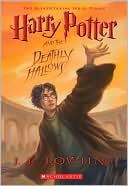
I know JK Rowling said she cried after she wrote the chapter where Sirius Black died, and again while writing key scenes in Deathly Hallows. And those were definitely emotional for me as a reader.

I always wonder how authors get through the scenes that hit me so hard I have to put the book down. Like in THE HUNGER GAMES when Rue died.

What about you, do you ever get emotional while writing? What are some of your favorite emotional scenes you've read? (No spoilers!)

Tuesday, July 20, 2010

The Cycle of Writing

I've discovered something about myself after writing my first YA novel this past year. I work really, really hard in the Fall, and um, not as hard in the Summer. It took me 6 weeks in Sept. and Oct. to write my first draft. It might be because I associate that time of year with starting school and buckling down after a summer full of snow cones and swimming. Summer=Fun. Fall=Work.

I'll admit it--this past week, when I should have been writing, I splashed around the pool with my kids and watched my 3-year-old daughter flirt under a fountain with her 7-year-old fiance (long story but she proposed and he didn't say no, so she's laid claim on him as her future husband). When I should have been revising, I took the kids to Toy Story 3 (AMAZING movie by the way--go right now if you haven't seen it!) If there was a choice between going out for ice-cream and reconfiguring Chapter Three, the chocolate milkshake won. Every. Single. Time.

Not that I've been a total slacker. I've written six chapters of a new YA and have revised my 'old' ms for the billionth time--but I've done it at a slower, Summer pace. I feel September creeping up on me and know I'll kick into high gear again soon, which is good, as I'll stop eating my weight in ice cream. But for now, I plan to hold onto August for all it's worth--by balancing writing with soaking up the sun by the pool (someone has to keep an eye on my precocious daughter).

What about you? Any cycles, seasonal or otherwise, that you've noticed with your writing? Am I the only one that has a weakness for warm weather ice-cream consumption?

Wednesday, February 24, 2010

Keeping Track Of Shiny New Ideas

If you're like me, whenever you're in the middle of doing something that requires all of your focus (say, revising your novel *cough*) that's when you get hit with a Shiny New Idea(!) I find if I don't do something with those ideas, right away, I lose the spark and can't always get it back.

What I do, is as soon as a SNI hits, I write it down. In as much detail as possible. I keep each shiny new idea in it's own notebook. Specifically, Mead Five Star 1 Subject Notebooks, like these:
(I am perhaps, a little obsessed with them.) I buy them in every color possible because I have synesthesia and the color of the notebook is important to me. Seriously. Like, my current SNI is in a dark blue notebook. I could never write it in say a red, or lime green one, because the story is most definitely not lime green. Which sounds crazy, but trust me when I say this all makes sense. Anyhoo.

I like to free write.

Generally, I start with the bio of my main character. Most of my ideas start with either a character or a "what if". My current SNI started with a "what if" about a boy. So I knew both the situation and the character.

I label a blank page CHARACTER(S) and scribble down everything I know about this character, and usually, just the act of doing this reveals more and more info about the character and the plot.

After that, I label a new blank page BASIC INFO and write out the basics of the plot starting with a logline, like: A boy does ________ and learns _______. Or whatever. Then I go into more detail. Again, just the act of putting down vague ideas makes them clearer and adds in more detail.

I never pressure myself about this. This is all fun. It's like cleaning out a closet. I try to take every single thought I have about this idea and just get it on paper so that later I can go through it and know what I was thinking, the vibe of the story, etc.

I think in scenes so once I have my character and basic situation (plot) I tend to have a jumble of visual images and emotions of things that happen in the story. I start a new page labeled - can you guess? Yep, SCENES and I try to write out everything I see and hear (my ideas tend to play out like movies in my head) about the scene. I then ask myself, what happened? What lead up to this moment? Why is this happening? What happens after this? I write out all the dialogue I "hear", even if it doesn't totally make sense, because I don't want to miss anything that just might be brilliant.

The best thing about this process is that it opens up my mind to more ideas about the story. I discover new characters, and events within the story world, and that keeps it brewing in the back of my mind while I'm working on what I'm supposed to be doing. I will usually come back several times to add thoughts, new character details, songs for a playlist, etc. It also gives me piece of mind that my story will still be there when I have the time to devote to it.

By the time I'm ready to work on that story, I usually have my main character's voice, all my key scenes and plot twists worked out.

Using a separate notebook for each idea gives me the added bonus of feeling productive. I get a rush when I look at my stack of ideas and know that I have some cool ideas that I'm excited about waiting for me. I don't feel lost, or overwhelmed because I've already done most of the work in just a few minutes of stolen minutes of free time each day.

What about you? Do you have any writing obsessions like my notebooks? What do you do with your Shiny New Ideas?
Related Posts Plugin for WordPress, Blogger...

ShareThis